

When you notice your LG washer dryer not drying clothes the way it used to, it can feel confusing and inconvenient. All-in-one heat pump models work very differently from a standard vented dryer, so what feels like a problem is often a combination of normal design, maintenance needs, and settings that add extra time. Understanding how the system is built to work is the first step toward getting more predictable results.
This guide walks through how the heat pump system in an LG all-in-one unit manages moisture, why dry times can increase, and which common issues point toward a maintenance or repair need. We will also highlight where simple user care makes a difference and where it is safer and more effective to bring in a professional.
LG washer dryer not drying clothes: common causes and solutions
If you experience an LG washer dryer not drying clothes, it usually comes down to airflow, moisture removal, or controls that extend the cycle. Because a combo unit uses one drum for both washing and drying, the machine has to balance water removal, heat, and circulation in a more compact space. Even small changes in loading or maintenance can have a big impact on performance.
How the LG heat pump system dries in an all-in-one design
A conventional gas or electric dryer heats very quickly and vents hot, moist air out of the home. In contrast, an LG heat pump system recirculates air through a closed loop. A compressor warms the air gradually, moisture condenses on internal components, and the machine repeats that process at a relatively low temperature. This is why there are fewer heat level options on many LG combos and why dry times are naturally longer than a traditional vented dryer, even when there is no true drying malfunction.
- Heat pump dryers use lower temperatures that are gentler on fabrics.
- Moist air is recycled through the system instead of being vented outside.
- Dry times depend heavily on airflow and how well moisture can condense and drain.
Because the system runs at a steady low temperature, an LG washer dryer not drying clothes usually signals that moisture is not being removed efficiently. That can be as simple as restricted airflow from lint or a load that is too large, but it can also indicate an internal airflow or drain issue that calls for a qualified dryer repair Charleston, SC technician.
LG all-in-one washer-dryer won’t dry due to surface lint and restricted filters
If your LG all-in-one washer-dryer won’t dry the way it used to, the most common starting point is basic lint management. When this happens, it often appears as an LG washer dryer not drying clothes, since restricted airflow prevents the heat pump system from removing moisture efficiently. Heat pump combos rely on a series of filters and screens to keep lint away from sensitive internal parts. When these accessible filters are coated with fibers, air cannot move freely, and moisture removal slows down, which stretches out dry times.
- The main lint filter inside the door should be cleared after every cycle.
- Fine mesh sections of the filter can become clouded with microfibers.
- Lint on the door glass or gasket is a sign that airflow is carrying debris to new areas.
Safe maintenance includes removing visible lint from the primary filter after each load and rinsing fine mesh sections with water when they look coated, then letting them dry completely before use. If you keep up with this and still have an LG washer dryer not drying clothes effectively, deeper internal lint buildup around condenser components or hidden ducts may need attention from a professional who can access those areas safely.
LG all-in-one washer dryer has lint buildup around internal components
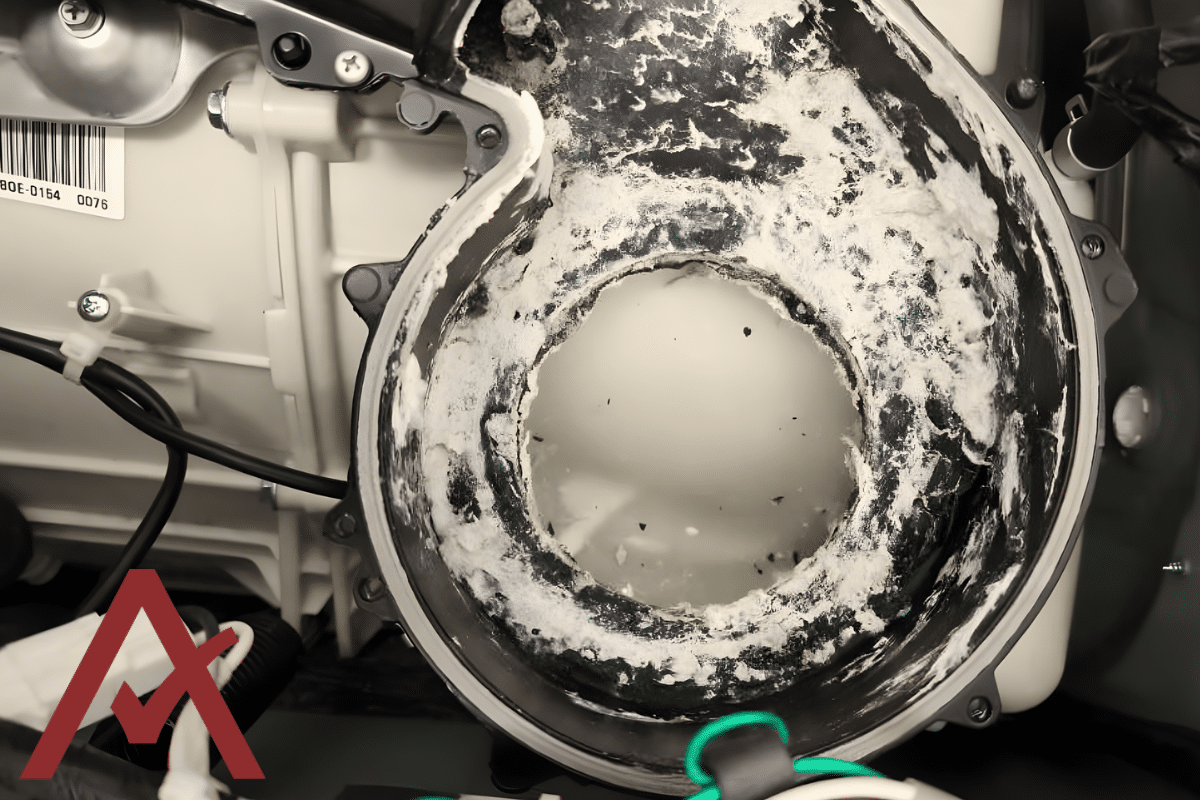
Over long use, some lint can move past the easily accessible filter surfaces and collect around internal parts such as the condenser area or inlet ducting. When this happens, it often results in an LG washer dryer not drying clothes, since the machine cannot move air or remove moisture as designed. This type of LG all-in-one washer dryer lint buildup can greatly reduce the efficiency of the heat pump system because it interferes with how the machine sheds moisture and recirculates air.
- Lint around condenser fins acts as insulation that slows heat exchange.
- Debris in internal air passages reduces circulation to the drum.
- Hidden buildup is difficult to see without partially disassembling covers.
Because these components are delicate and often sit behind covers or panels, it is safer to leave internal cleaning to a trained technician. Trying to reach coil fins or internal ducts without proper training can damage parts, void warranties, or create safety risks. If routine filter care is not resolving an LG washer dryer not drying clothes, scheduling professional maintenance can restore airflow and help prevent more serious failures.
LG combo washer dryer airflow problem from loading and drum capacity
Even with clean filters, an LG combo washer dryer airflow problem can show up when loads are too large or tightly packed. This can quickly lead to an LG washer dryer not drying clothes because the machine cannot circulate air the way the heat pump system requires. Remember that in a traditional laundry setup, the dryer drum is usually larger than the washer drum so that air can circulate freely. In a combo unit, the same drum is responsible for both washing and drying, which means loading habits matter even more.
- Filling the drum more than about half to two-thirds can restrict airflow.
- Heavy items such as towels and blankets hold onto moisture and slow drying.
- Mixed loads with light and heavy fabrics often finish unevenly.
For better performance when an LG washer dryer not drying clothes is a concern, try building loads with similar fabric weights and keep the drum comfortably filled but not packed. Give items space to tumble so that air can reach as much surface area as possible. If you need to wash a large set of towels or bulky bedding, splitting the load or planning for extra time can prevent repeated damp results.
When an LG washer dryer takes too long to dry because moisture is not leaving the system
In some cases, an LG washer dryer takes too long to dry because water is not leaving the machine as efficiently as it should. When this occurs, it often appears as an LG washer dryer not drying clothes, since excess moisture stays inside the drum and slows the entire drying process. A combo unit relies on a drain system to remove condensed moisture from the heat pump circuit, and any restriction in that path can affect dry times. On many models, this kind of problem can eventually trigger error codes such as OE or dHE. While the machine may still complete cycles, clothes can feel damp or warm and clammy at the end.
- Slow drainage can leave extra moisture inside the drum and internal hoses.
- Debris in the drain system can interrupt normal water removal.
- Improper drain hose height or kinks can make it harder for the pump to move water.
User safe steps include visually checking that the external drain hose is not sharply bent and that it is supported at a height recommended by the manufacturer without adding extensions that make the run longer. If you still experience an LG washer dryer not drying clothes after confirming basic installation details, a technician can inspect the internal drain components and pump assembly to address clogs or failures without risking leaks or damage.
Control settings that quietly extend dry times
Another common reason an LG washer dryer not drying clothes as expected is the way cycles and options are set. The combo design allows you to link a wash and dry cycle together, or to run drying on its own, and each choice interacts with soil level, extra rinses, and energy-saving features. Some of these settings prioritize fabric care or efficiency over speed, which can be surprising if you are used to a conventional dryer. In addition, a dry-only cycle can feel slower because the system starts at room temperature and may default to gentler, energy-saving heat settings.
- Energy-saving dry options often trade shorter cycles for lower energy use.
- High soil levels, extra rinses, and added steam increase total time.
- Using a dry-only cycle can feel slower because the system has to warm up from room temperature.
For faster results, many owners have better luck selecting a combined wash and dry program that uses a high spin speed by default. Extracting more water in the spin stage gives the heat pump less moisture to deal with later. Avoid opening the door mid-cycle whenever possible, since that releases warm air and forces the system to start building temperature again, which can contribute to an LG washer dryer not drying clothes and can make an LG washer dryer take too long to dry, even when everything else is working correctly.
When to call for professional service on an LG washer dryer not drying clothes
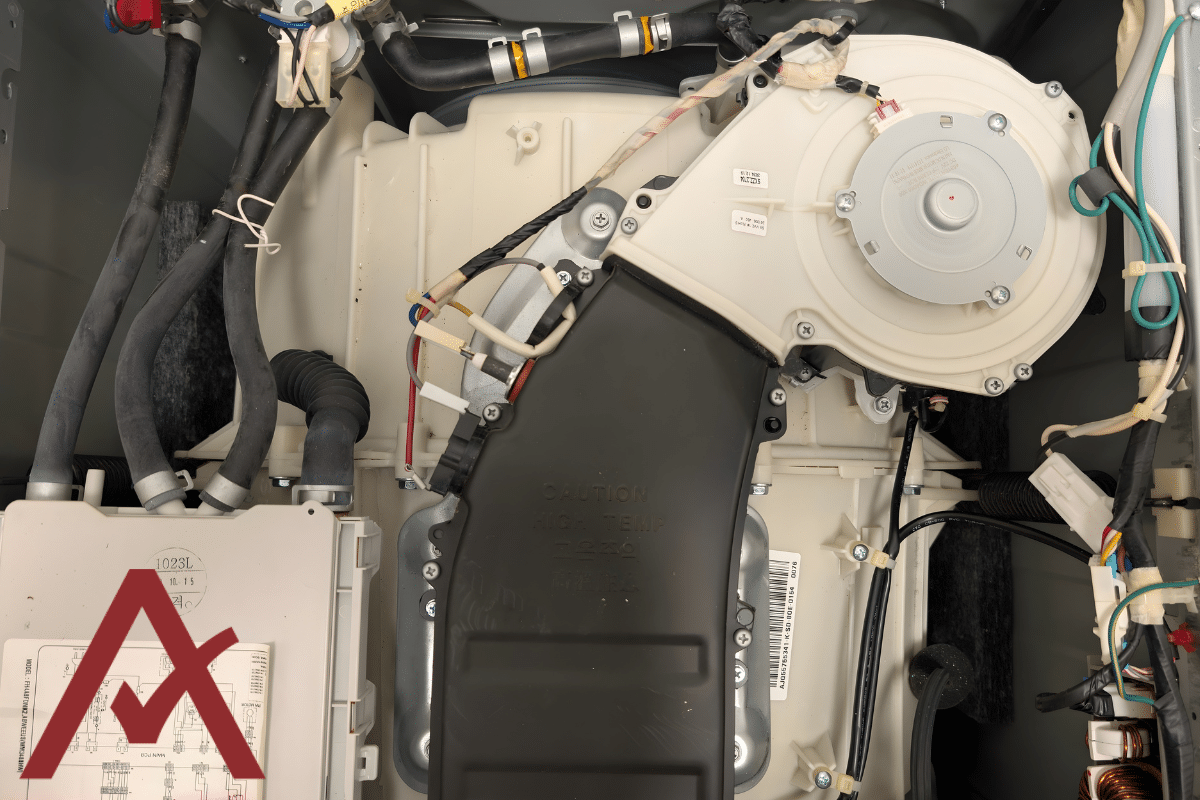
If you have adjusted load sizes, kept up with visible lint cleaning, and reviewed your cycle choices yet still notice an LG washer dryer not drying clothes, it is time to think about professional diagnosis. At this point, the most likely causes are inside the machine where access involves covers, electrical components, and sensitive parts of the heat pump system.
- Persistent error codes or unusual noises during drying can point to component issues.
- Repeating the same cycle and getting damp results suggests restricted airflow or failing sensors.
- Sudden changes in dry time or temperature may indicate a developing fault in the heat pump or controls.
A trained technician can test sensors, examine internal airflow paths, and evaluate the condition of the heat pump and drain system without creating safety risks. When persistent issues lead to an LG washer dryer not drying clothes, a professional can determine whether repair or replacement is the better long-term choice based on the age of the unit and the cost of parts. This type of guidance is especially helpful if you are deciding how much to invest in a combo unit that has become less reliable over time.
Living with an LG washer dryer not drying clothes reliably does not have to be the new normal. When you understand how the heat pump design works, how lint and airflow affect performance, and how settings influence total cycle length, you can make simple everyday adjustments that support better results while protecting your fabrics.
Start with safe steps such as cleaning the primary lint filter, keeping the door gasket free of visible lint, and choosing load sizes that allow air to circulate. If static buildup is a recurring issue once your dryer is working properly, resources that explain how to reduce dryer static can help you keep laundry more comfortable and easier to fold.